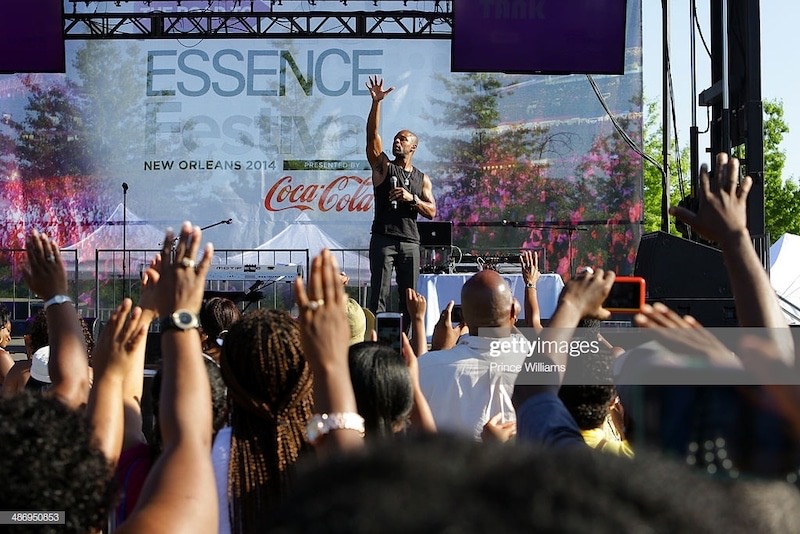
A brand activation can draw a big crowd and still move no product. It happens more often than the recap decks admit. The photos look great, and a month later the sell-through looks exactly like it did before the event.
Part of the reason is that most teams can't say what their programs returned. More than 75% of the marketers who most frequently run experiential programs were either unable to measure the impact or unsure whether they could, according to a Delphi study in the Journal of Brand Management, which credits the figure to Harvard Business Review 2017. If you're the one approving the budget, that number explains a lot.
After 30+ years in this work, I've watched a big crowd get reported as a win more times than I can count. If you buy or oversee experiential work for a consumer or CPG brand, you've probably sat in that debrief. Here's how to keep the next one from going the same way.
What is experiential marketing?
Experiential marketing is a campaign built around an experience your target audience takes part in, instead of an ad they scroll past. Sketch Events puts it this way: experiential marketing is an activation-based campaign that is created to provide an experience for a target audience.
The field goes by a lot of names. Wikipedia's entry notes it is also sometimes called brand activation, on-ground marketing, live marketing, participation marketing, loyalty marketing, or special events. The labels differ. What they share is a person physically engaging with a brand.
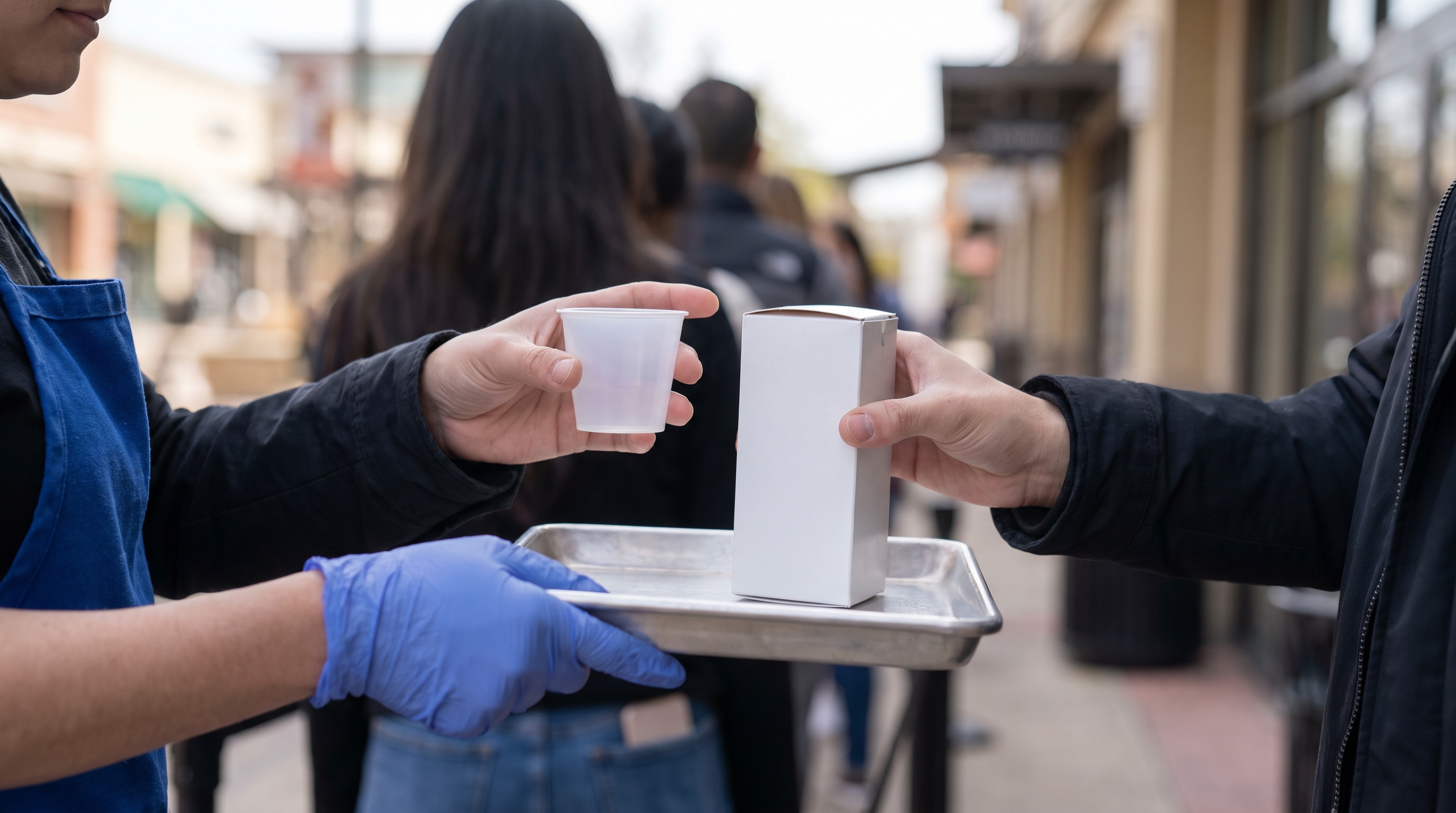
For us, the working definition is narrower. We get products in the hands of consumers. Someone tastes it, holds it, tries it, or buys it. If the product and the person aren't both in the frame, we don't call it an activation.
Why does a big crowd still sell nothing?
Because attendance is easy to count and easy to buy. A loud stage, a giveaway, or a good location will gather people. None of that tells you whether anyone picked up your product or took a step toward buying it.
If most of the people running these programs can't say what they returned, a recap built on reach and photos is the likely result. Nobody lied. Reach was simply the only number anyone had.
There's also a gap between a good feeling and a purchase. Expo Centric, citing The Event Marketing Evolution 2018, reports that 52% of consumers say they have more positive feelings about brands after attending experiential marketing events. That tells you about attitude. It says nothing about units sold, and you shouldn't let it stand in for them.
Most marketing money gets committed before anyone checks whether the place, the time, the audience and the message line up. That order of operations is the real problem, and it's the one we built MOGXP to fix.
How do place, time, audience and message line up?
An activation works when all four line up, and if even one is off, it fails. You can check each before a dollar goes out, and most of the checks are questions you can answer with a phone call or a spreadsheet.
| Factor | What to confirm before spend | What failure sounds like in the recap |
|---|---|---|
| Place | The people who buy this product are physically there, and the product category fits the setting | "Great foot traffic, wrong shoppers" |
| Time | The day and hour match when your buyer is making a decision, near a purchase if possible | "We were set up after the rush" |
| Audience | You can name who you want in front of the product, and you can tell them apart from passersby | "Everyone loved it, nobody was our customer" |
| Message | Someone who spends 30 seconds at the table can say what the product is and why they'd buy it | "They remembered the game, not the brand" |
Read down the right-hand column and you'll notice that none of those complaints is about creative. A brilliant concept in the wrong parking lot still loses, and we'd rather fix the location than polish the stage.
This is where our method comes in. Local Impact Marketing runs in three stages: Spend Audit, Targeted Reallocation, and Run and Prove. The audit looks for waste in the plan before the money goes out. Reallocation aims what's left at the right product, the right audience, and the right place. Then we run the program and prove what it did.
Before any program goes live, we also model the scenarios against industry benchmarks. If a market, a date, or a format can't survive that, it comes out while it's still cheap to remove. Our piece on intentional experiential marketing goes further on planning with a purpose.
What should you measure instead of attendance?
Measure whether people tried the product and whether they bought it. Reach still belongs in the recap, but it can't be the headline.
Decide the sales metric before launch, not after. Agree with your team on what counts as success in units, in trial, or in repeat purchase, and how you'll pull the number. Retail scan data, redemption codes, and market-versus-control comparisons are the usual routes. Which one fits depends on your channel and on what your retailers will share.
Our guide to choosing experiential metrics covers how to pick them. How experiential marketing drives real ROI shows what the return conversation looks like once you have them.
There's a practical reason to do this early. In the same Expo Centric roundup, 40% of event technology adopters say the number one benefit is an improved ability to track and measure events, citing G2 Event Management Platforms, 2019. Tracking gets set up in planning. You can't rebuild it from photos afterward.
Does it work if you have a small budget, or sell to businesses?
It can, on both counts.
On budget, you don't have to spend a lot on a big event or sponsorship. Smaller, affordable tactics exist, and a smaller targeted program sometimes returns much more per dollar than a larger one. A single well-chosen location with real trial can beat a splashy sponsorship that nobody connects to your product. Planning time scales with size too, and how long experiential marketing takes to plan walks through it.
On B2B or services, the product just looks different. Hands-on demonstrations, a sample of a small piece of the service, hospitality lounges, and stand-alone events all put a buyer inside a real moment with your company. If you sell services, trial can still happen. It happens at a table, in a room, or on a screen share instead of at a sampling cup.
What does a program that sells actually look like?
It looks like a short plan with a sales number in it. Someone picked the location because the buyer is there. Someone built a way for attendees to use the product on the spot, and gave them an obvious next step before they walked away.
Super-Sampling is our anchor-city strategy. We pick the cities on purpose and concentrate there, so the product shows up often enough in one market to be noticed.
Here's what we've run. For the Kellogg's Krave launch, the goal was 250,000 samples and we delivered 300,000. For ISOPURE, we put 24 Amazon Treasure Trucks in 24 cities in one day. For Toyota, a Marine Corps boot camp challenge produced more than 2,500 brand touches in eight hours. Those are sampling and engagement counts, and we're not claiming sales lift from them.
We've also worked with PepsiCo, Rite Aid, Walmart, and Budweiser. To see how an agency works day to day, what an experiential marketing agency actually does is the plain-language version. If you want the broader picture of our work, our experiential marketing services page is the place to start.
What if you're an agency with a small event team?
Then we're more likely a partner than a competitor. We work with creative agencies to make their designs work harder in the field, and with traditional ad and PR agencies that want live events without building a full event department. You keep the client relationship and the strategy. We bring the staffing, the logistics, and the sampling experience in the market you're targeting.
The question to ask any partner, including us, is who has actually staffed a sampling program in that city. Ask to see the numbers from it.
What mistakes sink experiential programs?
Buying a booth or sponsorship and showing up with no activation plan is the one I see most. The space buys you presence. It doesn't get anyone to try the product, and if nobody on your team owns trial, it won't happen.
Handing live events to your agency of record because it's convenient goes wrong a lot too. Some agencies do it well. Others have a small event team and plenty of other priorities, so the program becomes an add-on that nobody fully owns.
Watch the recap as well. When it leads with impressions, the next program gets planned to chase impressions, and the loop keeps going. Put trial and conversion on the first page.
Location trouble usually starts with the words "it was available." Availability is a poor reason to pick a spot. Ask where your buyer already is and whether you can be there at the hour they're deciding.
And if you want a crowd more than customers, this approach will frustrate you. We're a poor fit for a brand that wants a flashy event with no plan to move product or measure the result.
FAQ
What is experiential marketing activation?
An activation is the live moment where a brand and a consumer meet, such as a sampling table, a branded truck, a pop-up, or a stage in a parking lot. It's the working part of an experiential campaign, where someone tries, holds, or buys the product.
Is brand activation the same as experiential marketing?
The two terms overlap heavily. Wikipedia lists brand activation among the other names for experiential marketing. In practice, people use activation for the single live event and experiential marketing for the whole campaign around it.
Does experiential marketing work for B2B brands?
Yes. B2B brands use hands-on demonstrations, hospitality lounges, workshops, and stand-alone events to put buyers inside a real moment with the company. The format changes, but the goal is the same: get the buyer to try something before they decide.
How do I know an activation worked?
Compare trial and sales against a baseline you set before launch. Attendance and photos show you were there. Units, redemptions, or a market-versus-control comparison show whether the program moved product.
What to do today
Before you approve your next activation budget, write down the sales metric and one sentence on why this place, this hour, and this audience. If you can't write both, the plan isn't ready.