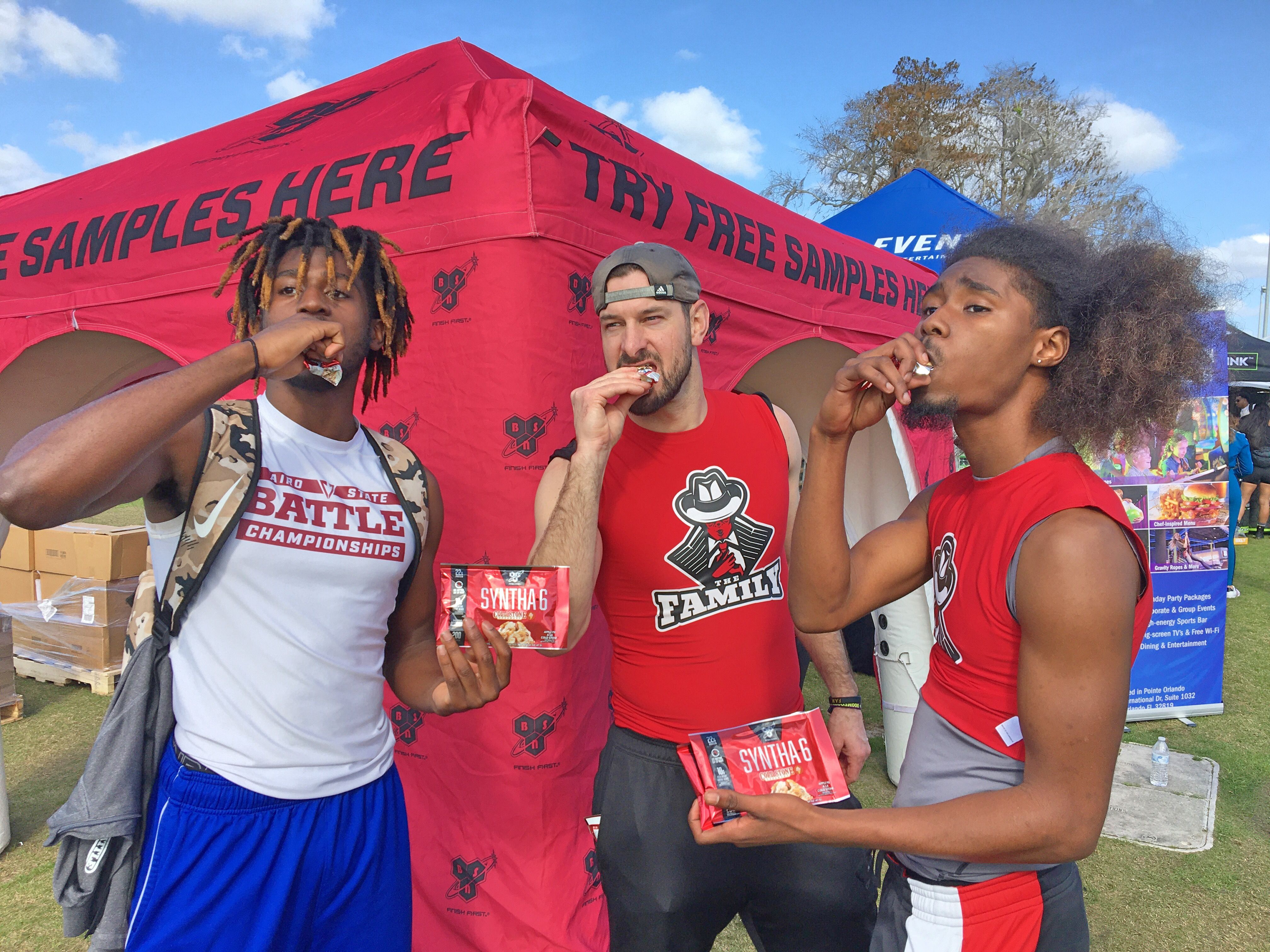
A brand activation can draw a big crowd and still move no product. It happens more often than the recap decks admit. If you run marketing at a consumer brand, you've probably said the other thing too, in a budget meeting: we don't have the budget for that. It's a fair reaction when the examples people share are stunts and stage tours. Those cost what they cost.
But the objection assumes experiential marketing means one big event. It doesn't. Some of the smaller tactics cost a fraction of a tour and still put the product in people's hands. I'd start there.
Which experiential marketing tactics work on a smaller budget?
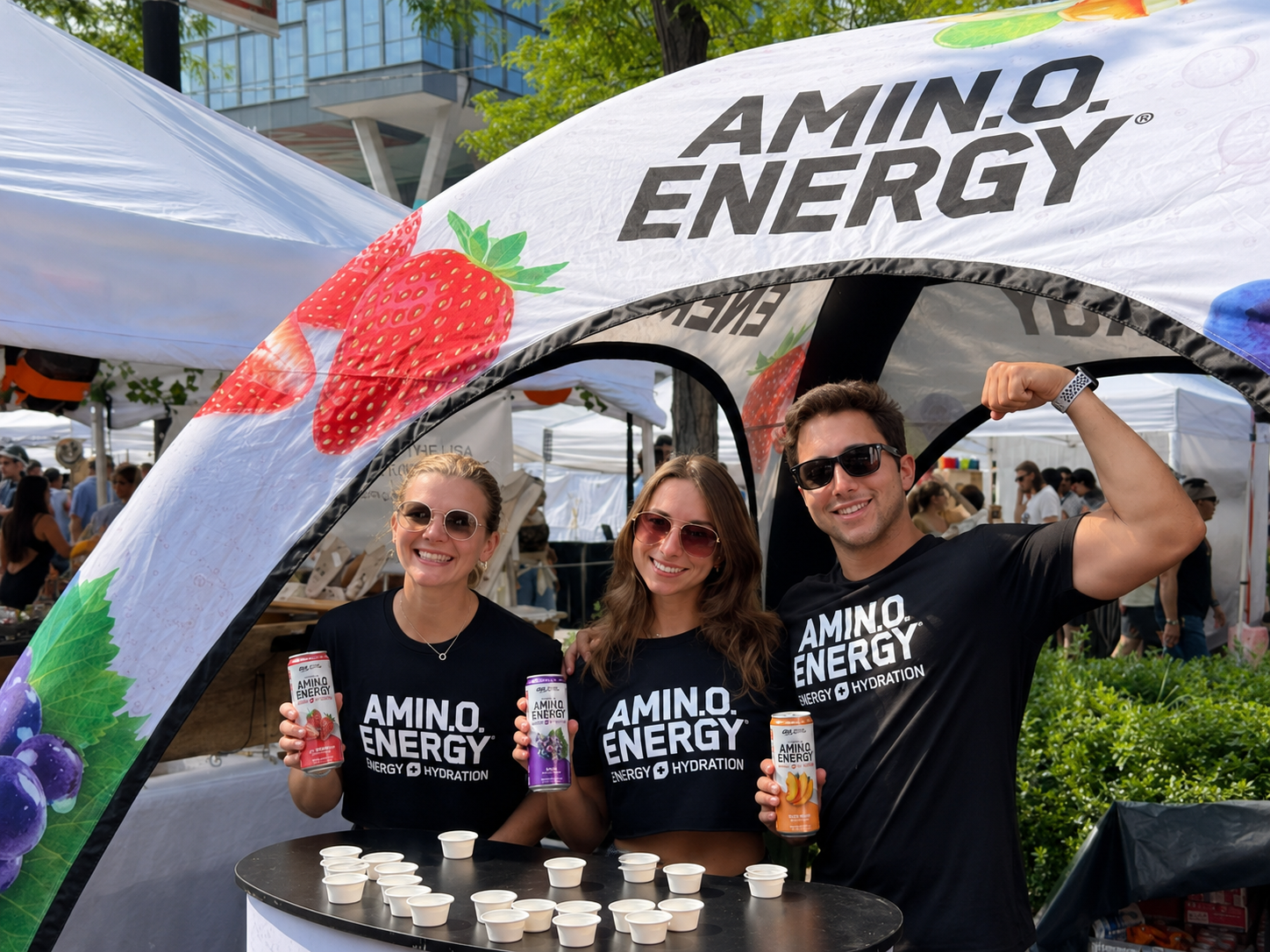
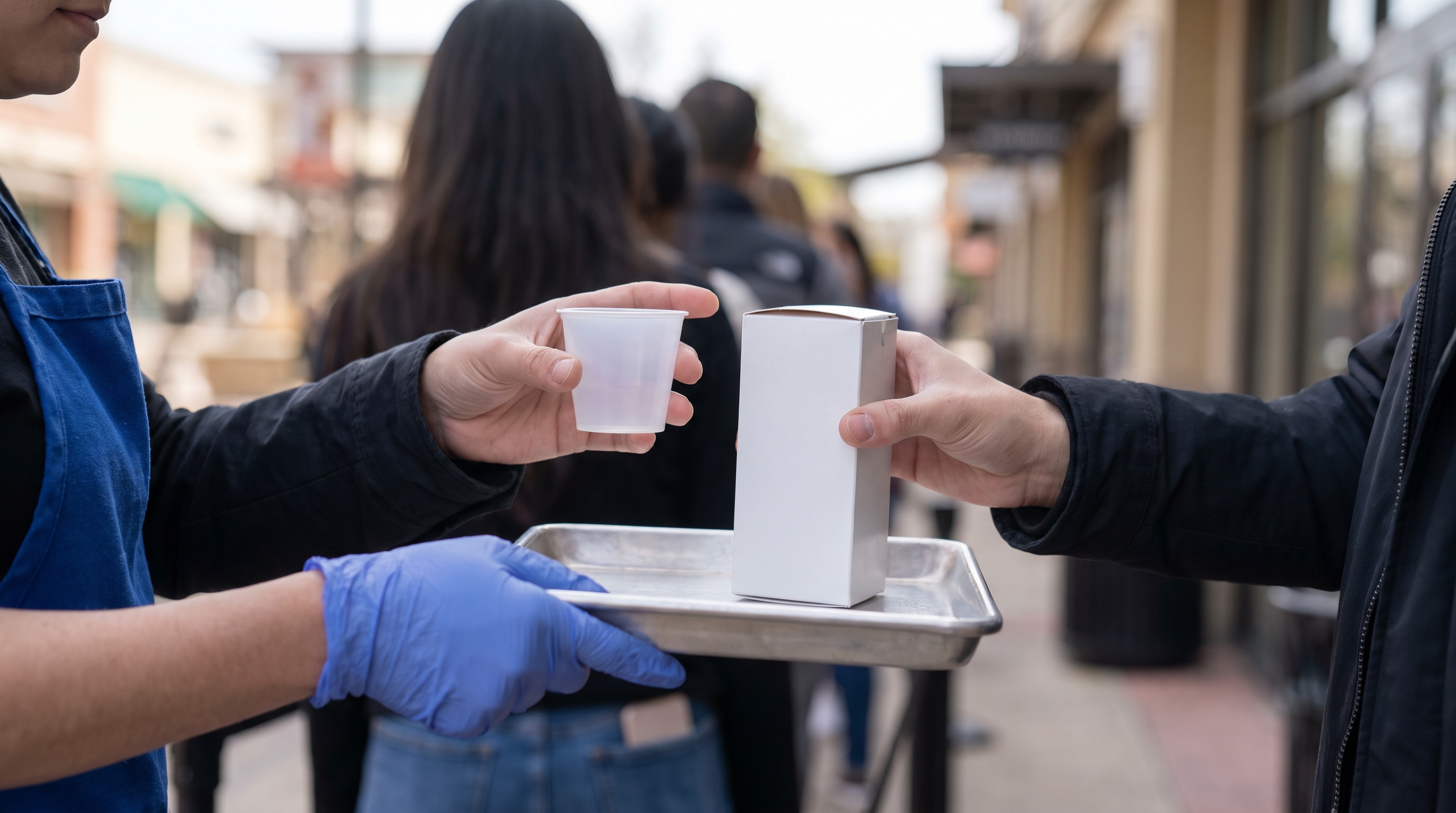
The tactics that work on a smaller budget are the ones where a person holds, tastes or tries your product within a few feet of a staff member who can answer questions. Sampling, pop-ups, ambassador programs and hands-on demos all fit. Large stage events and mobile tours usually don't.
We rank them on two things. The first is cost relative to the others. The second is whether product actually changes hands, because a crowd that never touches the product is the failure we see most.
| Tactic | Relative cost (our read) | Product changes hands? | What to count |
|---|---|---|---|
| Sampling at a staffed table | Lower | Yes | Samples handed out, intent to buy, coupon or code redemptions |
| Hands-on demo at a retailer or venue | Lower | Yes | Demos completed, sales that day, intent to buy |
| Brand ambassadors on one campus or street | Lower to mid | Yes | Product trials, repeat contacts, sales in nearby stores |
| Pop-up or kiosk where your buyer already shops | Mid | Yes | Units sold, email or text sign-ups, intent to buy |
| Community or partner event | Mid | Sometimes | Product trials, partner-referred sales |
| Mobile vehicle or tour | Higher | Yes, if planned for it | Stops completed, trials per stop, sales by market |
| Sponsorship or stage event | Highest | Rarely | Only what you build in, such as on-site sales or sign-ups |
The cost column is relative and it's our read, not a price list. Real prices depend on the number of markets, the number of events, staffing, production and how long the program runs.
Look at the last column before you look at the cost column. The tactics at the top of the table are cheaper partly because they skip everything that doesn't touch the product.
Why does product changing hands matter more than crowd size?
Product changing hands matters because a trial is the closest thing to a sale that an activation can produce on the day. A photo, a hashtag or a headcount only tells you that people were nearby.
People say they want it this way. And MarketingProfs reports that 77% of respondents in a Freeman study said they trusted brands more after interacting with them live. GEP, citing EventTrack 2023, says 91% of consumers are more likely to buy after taking part in an event or experience.
Those are survey answers about attitudes. They don't prove a sale, and you shouldn't promise one on their strength. They do explain why a sample in someone's hand does more work than a banner above their head.
There's a wider pattern behind this too. Researchers at Liverpool John Moores University note that consumers have begun to seek unique experiences rather than just consuming products and services. A small tactic that gives someone an experience of the product fits that habit.
How do you choose one tactic and get it running?
You choose by working through four checks in order, and you stop at the first one that fails. They work as a filter on a small budget, because a small budget leaves no room to be wrong about any of them.
- Place. Pick the spot where your buyer already stands with a purchase in mind, such as a store entrance, a campus quad or a neighborhood event. A table in the wrong place is wasted staff time.
- Time. Match the day and hour to when that buyer is actually there. A Saturday morning farmers market and a Tuesday afternoon one are different audiences.
- Audience. Write down who you want to reach and who you'd turn away. If everyone is welcome, you'll count everyone and learn nothing.
- Message. Decide what one thing the person should know after thirty seconds with your product. Train every staff member to say it the same way.
Campaigns work when the right place, time, experience and message all line up. If even one is off, the campaign fails.
Then run it small in one market. One table, one weekend, one location. You'll learn more from that than from a plan spread across five cities, and you'll know what to change before you spend more. Our Super-Sampling approach works the same way, starting from an anchor city.
What should a small activation actually measure?
A small activation should measure the things you can tie to a purchase: product trials, sales in the days after, and stated intent to buy. Crowd size and social impressions can sit on the report, but they shouldn't decide whether the program worked.
Intent needs a short exit survey, and the sample size matters. Portma, a research firm that runs experiential surveys, says that for any given program they aim to get between 350-400 completed surveys per market. That's a good bar if you plan to quote a percentage to your leadership. With fewer responses, report the number as a rough read and say so.
Set the measures before the event, not after. Decide which number would make you run it again and which would make you stop. For more on picking those numbers, see our piece on choosing experiential marketing metrics, and for how the return gets calculated, how experiential marketing drives real ROI.
Industry budgets are pointing up. ATN Event Staffing reports that 74% of Fortune 1000 marketers plan to increase their event budgets in 2025, citing EventTrack. That's a stated plan, not money already spent, and it says nothing about what any one tactic returns. Your own count does.
What does this look like in the field?
Sampling is the tactic I trust most, and the numbers from our own work show why you count product contacts first. For the Kellogg's Krave launch, the goal was 250,000 samples and we delivered 300,000. For ISOPURE, we ran Amazon Treasure Truck sampling with 24 trucks in 24 cities in one day. At the Toyota Marine Corps boot camp challenge, the activation produced more than 2,500 brand touches in eight hours.
Those are large programs, and your first one won't be. The habit transfers down, though. Set a contact target for a table, a pop-up or an ambassador team at a size your budget supports, and check it at the end of the day.
The method behind that is Local Impact Marketing, which runs in three stages: Spend Audit, Targeted Reallocation, and Run and Prove. The audit finds the waste in a plan before the money goes out. Our page on what an experiential marketing agency actually does covers how the work gets divided between a brand and an agency.
What mistakes sink small experiential programs?
The mistake we see most is buying the booth or the sponsorship and showing up without a plan for what happens at it. A sponsorship puts your name in front of people. It doesn't hand them the product.
The second mistake is spreading a small budget across too many places. Three tables in three cities gives you three weak reads. One table with good staffing and a clear message gives you a result you can trust.
The third is hiring ambassadors and giving them a script but no answers. Consumers will ask about ingredients, price and where to buy, and staff who can't answer lose the sale.
The fourth is measuring too late. If you didn't decide on your counts before the event, you'll pick the flattering ones afterward. For a fuller picture of where these tactics sit, start with our experiential marketing overview.
FAQ
How much does a small experiential program cost?
It depends on the number of markets and events, staffing, production and program length. For emerging brands, our programs run $5K to $50K each. A single sampling table in one market sits at the low end of what's possible.
How many markets should you start with?
One. Run a single table or pop-up in one place, count product contacts and sales, then decide whether to add a second market. That's the logic behind our Super-Sampling anchor-city approach.
What are the 7 tactics of marketing?
There's no fixed list of seven. For experiential work, the tactics we use most are sampling, pop-ups and kiosks, hands-on demos, mobile tours, brand ambassadors, VIP hospitality and sponsorships. Start with the ones where product changes hands.
How do you know a small activation worked?
Compare your product contacts, sales and stated intent to the targets you set before the event. If you hit the number you named in advance, run it again. If not, change one variable.
Your next step today
Pick one market and one tactic from the top of the table, and write down the one number that would make you run it again. We'll tell you honestly whether a table, a pop-up or something bigger is the right place to start.