Over 8 million people watched Red Bull Stratos live, according to Skift Meetings, and the page prints no sales figure. Public numbers on famous campaigns measure reach. The best campaigns moved product.
If you market a consumer or CPG brand, you've probably sat through a recap deck full of photos and impressions while someone quietly wondered whether a single extra unit sold. That's the question. Most "best campaigns" roundups rank by how much attention a stunt got, which is easy to count and tells you almost nothing about the register. We rank by what each campaign can show about product moving, and we say plainly where the evidence stops.
What makes an experiential campaign "best" for a CPG brand?
A campaign is best when you can connect it to a consumer holding, trying or buying your product. Attention is the cheapest thing an activation produces. A crowd can show up, take photos and leave without buying anything.
There is a reason to expect better. One roundup reports that, according to research cited by Interactive Dallas, 74% of consumers say engaging with branded experiences makes them more likely to buy the product. That's a stated intent from consumers, not a sales result, so treat it as a reason to try this and not as proof that any one campaign worked.
The measurement problem is real and marketers admit it. A survey summarized by Stova found that 1 in 3 marketers find it hard to demonstrate positive ROI. A campaign you can't measure is hard to defend at budget time, however good the photos look.
Which famous campaigns can we rank, and on what evidence?
We only ranked outside campaigns we could find in two separate sources we opened. That left two, and neither source reports a sales number.
| Campaign | What the sources confirm | Sales or product evidence published | Where it lands |
|---|---|---|---|
| Red Bull Stratos (2012) | A jump from a stratospheric balloon at 128,000 feet. Over 8 million watched live. | None in either source | Reach, not sales |
| Refinery29 29Rooms | An ongoing campaign, described as an Instagram playground | None in either source | Attention, not sales |
Read the last column before the first three. Two of these are famous because they were spectacular. That's a fair reason to admire them. It isn't a reason to copy them if your goal is units sold.
How did Red Bull Stratos do?
Stratos was a very large piece of attention. Interactive Dallas calls it one of the most iconic experiential marketing examples, a 2012 jump by Felix Baumgartner from a stratospheric balloon at 128,000 feet. Skift Meetings adds that over 8 million people watched it live.
Neither page says what happened to Red Bull sales. So the honest ranking is that Stratos leads in reach and says nothing about product. Few brands have the budget, or a product that suits a jump from the edge of space, so the scale isn't the lesson for anyone selling a snack, a beverage or a household item. Someone decided the event should be so memorable that people would watch it without being asked, and that decision is the part you can borrow.
What about 29Rooms?
Refinery29's 29Rooms shows the shareable end of the format. Skift Meetings describes it as "basically an Instagram playground," and Material Growth points to it as an ongoing campaign worth studying.
That tells you what it was built to do, which is get people photographing it. It doesn't tell you what happened at a register. If a campaign's main product is content, ask whether the content carried your product or only the venue.
What does a product-first campaign look like?
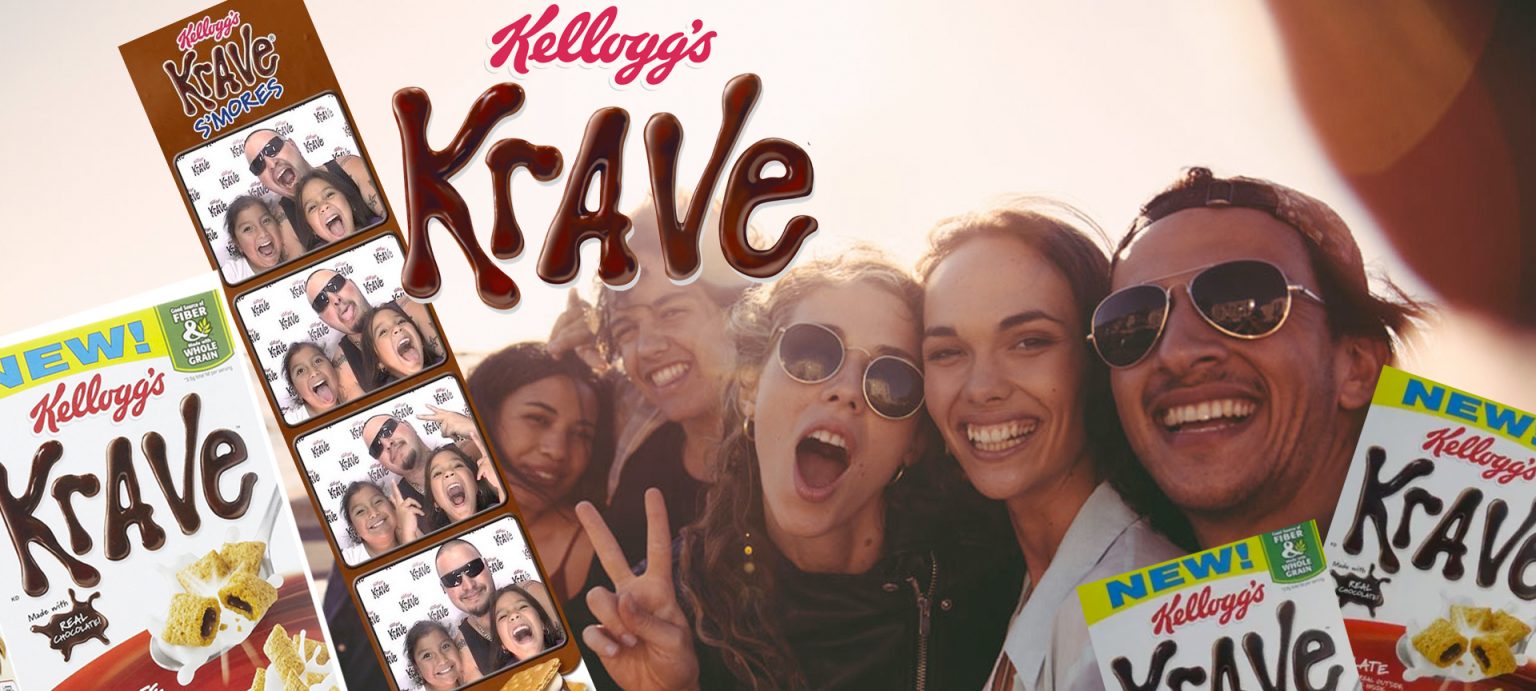
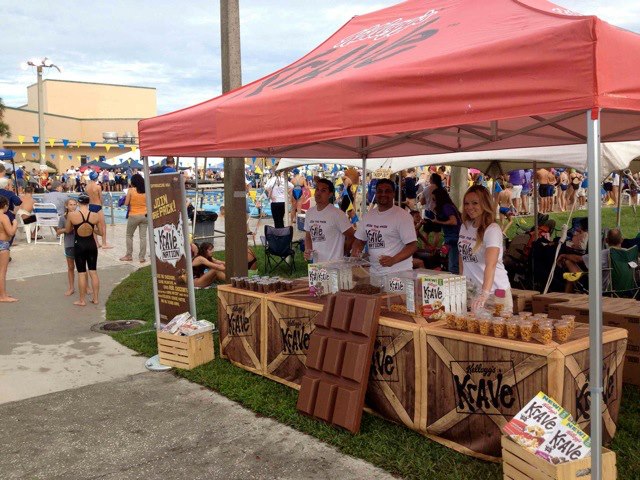
The example we can speak to directly is one we ran. According to our published Kellogg's Krave case study, Kellogg's set a goal of 250,000 samples.
The same case study reports 300,000 targeted samples delivered against that 250,000 goal, and a Facebook community that grew by 175,000 against a goal of 100,000.
Here's the limit, and we'd rather say it than have you find it. A sample in a hand is closer to a sale than a photo is, but it isn't a sale. We don't have a purchase figure for Krave in the files behind this article, so we can't claim the samples turned into units sold. What the numbers do show is the right kind of goal. It counted consumers who tried the product.
If you want the pattern behind that approach, our piece on why experiential marketing works better for new product launches goes deeper.
How should you score a campaign before you copy it?
Score it on the closest thing to a sale you can measure, then work backward. Start with the strongest evidence and move down only when it's missing.
| Evidence level | What to ask for | Why it matters |
|---|---|---|
| Purchase | Units sold, redemptions, or sales lift in the activation markets | The only direct answer |
| Trial | Samples delivered or products demonstrated, with a target | Product reached a hand |
| Engagement | Time at the activation, opt-ins, scans | Interest, not purchase |
| Reach | Attendance, impressions, views | Attention only |
Most famous campaigns publish only the bottom row. That isn't a criticism. A "best of" list built from public coverage is a list of the loudest ones.
Budget reality matters here too. You don't need a stratosphere. Our notes on budget-friendly experiential marketing campaigns cover smaller formats, and smaller targeted tactics sometimes deliver much better returns than large ones.
What mistakes make a good-looking campaign a bad buy?
The first mistake is choosing a campaign because it photographed well. A packed crowd with no product in sight is the exact failure we exist to fix, and it's easy to mistake for success when the recap deck arrives.
The second is copying a campaign's scale and ignoring its goal. Stratos worked as a media event. If your goal is trial, a smaller event built to put the product in people's hands may serve you better than a spectacle they watch from a distance.
The third is skipping the measurement plan until after the event. Nobody agreed beforehand how product reaching a hand would be counted. So you report reach, because reach is all you have. Agree on the number first, and read how experiential marketing drives real ROI before you sign anything.
The fourth is treating the stat as the strategy. A figure like Skift Meetings' report that around 70% of consumers become repeat customers after a great brand experience is encouraging. It doesn't tell you whether your place, time, audience and message line up. If one of those is off, the campaign fails. Our piece on intentional experiential marketing covers how to check.
FAQ
What are the best ad campaigns?
That depends on the scoreboard. If you rank by attention, Red Bull Stratos is hard to beat. If you rank by product moved, you can only judge campaigns that publish sales or trial numbers, and most don't. Ask for the number before you ask for the case study.
Is experiential marketing still a thing?
Yes, by what marketers report. Exposure Analytics lists a study in which 80% of 750 senior brand managers had increased their experiential event budget over three years. Those are survey answers, not results, so judge your own program by your own numbers.
What is the 3-3-3 rule in marketing?
We couldn't find a single sourced definition of it in the research behind this article, so we won't guess. If someone gives you the rule, ask where it comes from and what it measures before you build a plan on it.
Does experiential marketing work for a brand with a small budget?
It can. You don't have to spend a lot on a big event or sponsorship, because affordable, smaller tactics exist. The test stays the same. Count how many consumers tried the product, not how many walked past.
What should you do this week?
Pick the last activation you ran or paid for and write down the one number that shows product reached a consumer's hand. If you can't find it, that's your answer about what to fix first.