A brand activation can draw a big crowd and still move no product. Good experiential marketing services put your product in a consumer's hand and then show you what happened next. Each service does a different job, so ask every provider which job they're pitching and how they'll measure it against product movement.
If you run marketing at a consumer or CPG brand, you've probably seen the proposal that lists ten services and promises "engagement." What still surprises me is how many marketing leaders sign one without asking which of those ten is doing the work. The list tells you what a provider can staff. It doesn't tell you what your money will do, so we'll take the services one at a time.
What should experiential marketing services include?
They should include the full job of getting a branded moment onto the ground and proving it worked. That means permitting, staging, setup, staffing, security, sponsorship management and trained brand ambassadors, plus a measurement plan agreed before anything is booked. Strategy sits underneath all of it. Salesforce puts the category plainly: "Live events, pop-ups, and brand activations are just a few examples of experiential marketing." The category is wide, which is why the label alone tells you very little.
The money behind it is real. Elev8 reports that "A remarkable 74% of Fortune 1000 marketers plan to increase their experiential marketing budgets in 2025." That is a third-party roundup, so read it as direction for the industry rather than a benchmark for your category. It does mean you'll be buying in a crowded market where the proposals start to sound alike.
The way to tell them apart is the question we put first on every job. Does the place, the time, the audience and the message line up? If one of the four is off, the activation fails, however good the staffing is, and most marketing money gets committed before anyone checks. We built MOGXP to reverse that order. If you want the wider picture of what an agency does day to day, we cover it in What an Experiential Marketing Agency Actually Does.
What is product sampling for, and how do you measure it?
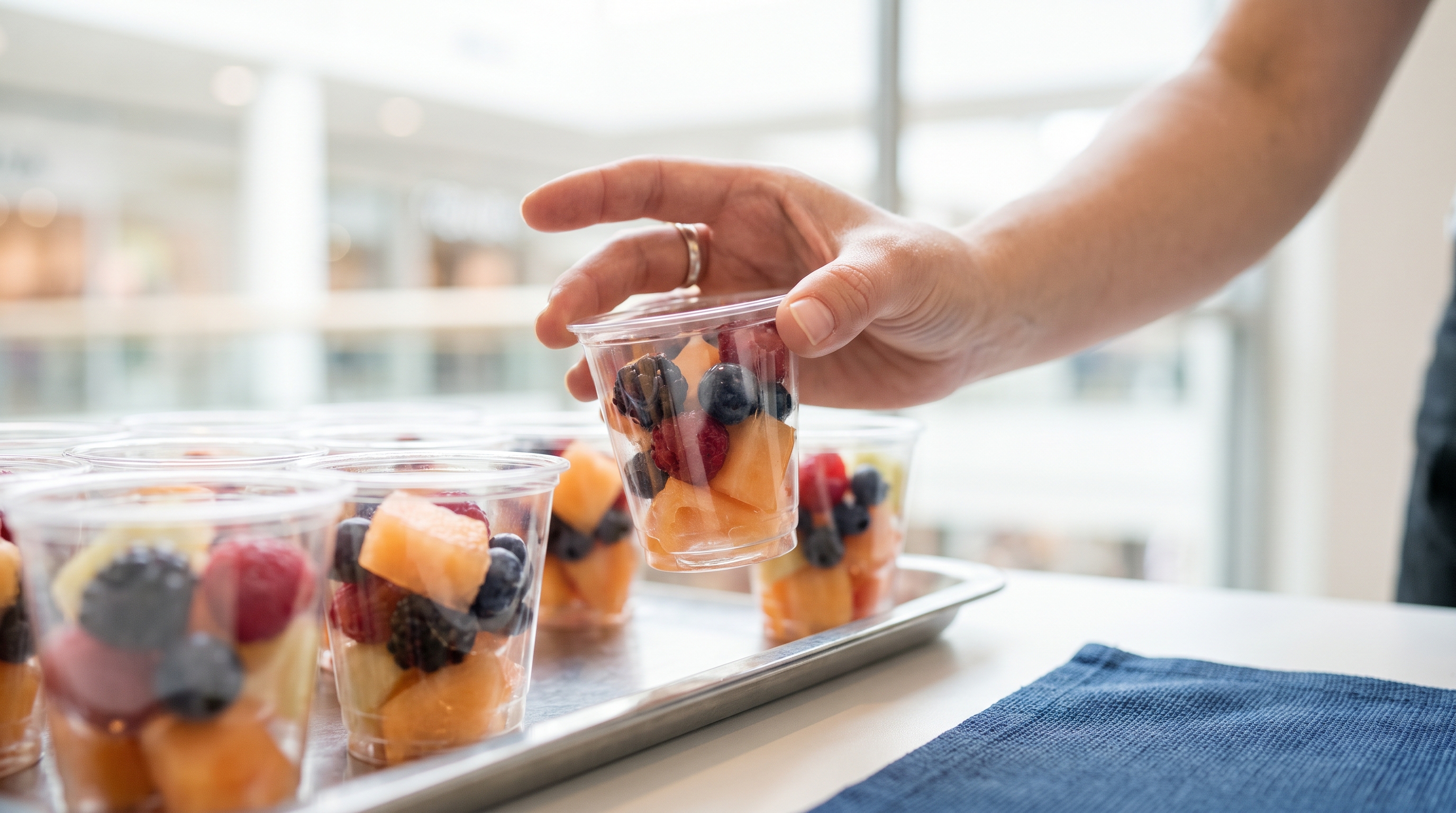
Sampling gets people to try your product, and it's the most direct way we know to do what we say we do: get products in the hands of consumers. A stranger holds the thing and forms an opinion in seconds.
The case for trial is easy to find. A roundup of experiential marketing statistics published in 2022 says "48% of consumers are more likely to buy a new product if they can try it first." It's a compiled figure from a third party, which makes it a good reason to run a test and a poor basis for a sales forecast.
Ask a sampling provider for samples delivered against the goal, by market and by day. Ask for the venue and the hours, since a sample handed out in the wrong aisle or at the wrong event is a wasted sample. Then ask how the program will be read against retail movement in the sampling zone, because that is the number your sales team will believe.
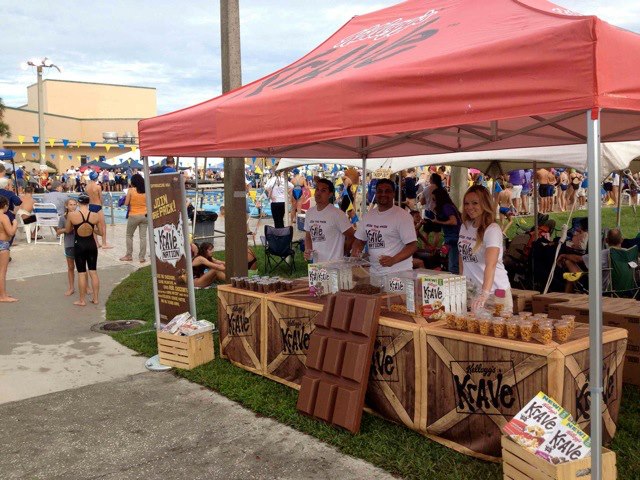
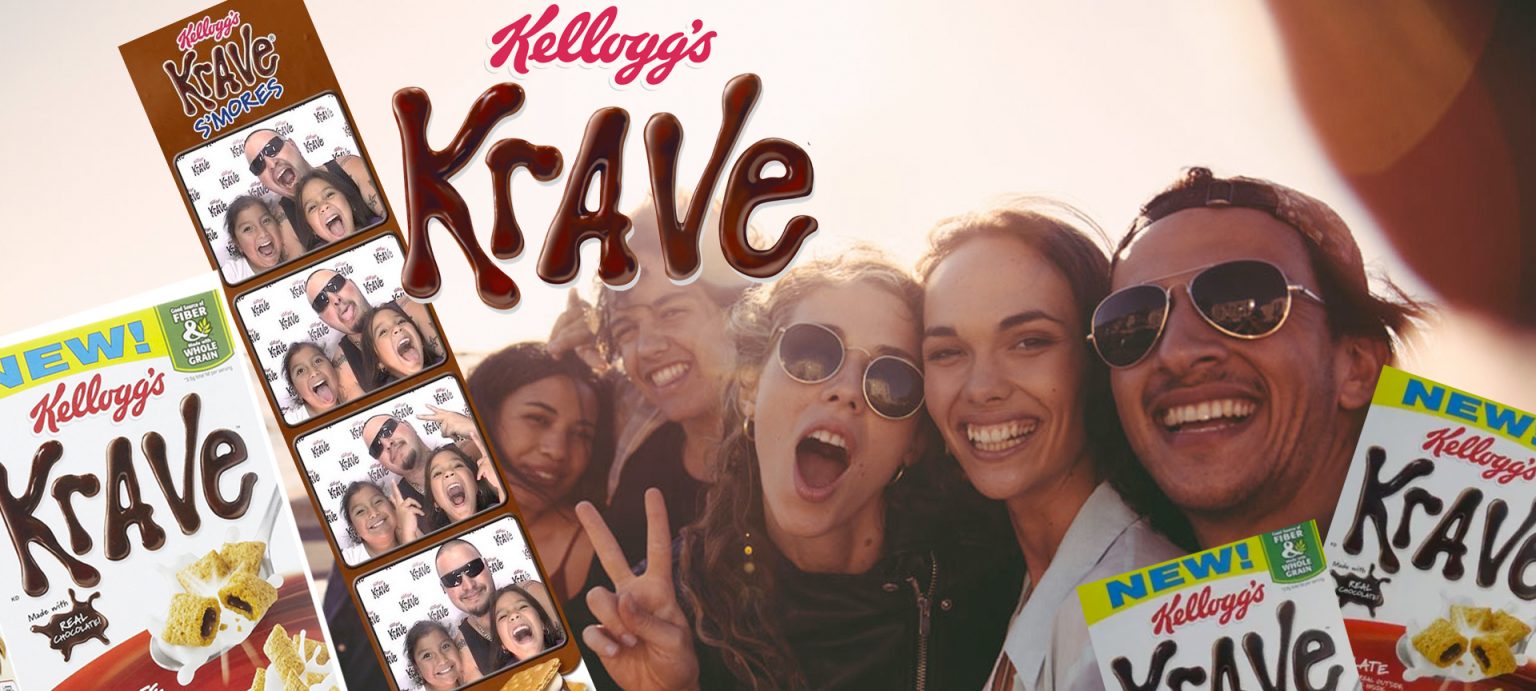
The Kellogg's Krave launch shows the first of those numbers. The goal was 250,000 samples, and we delivered 300,000. That tells you the volume was there. The sales read is the second number, and you should agree on how it will be taken before the first sample goes out.
What do mobile tours do that a fixed event can't?
A branded vehicle goes to your buyers instead of waiting for them. It can park at a retailer, a campus, a game or a street corner, which means you reach people who would never have bought a ticket to your event, and it can repeat the same experience in city after city.
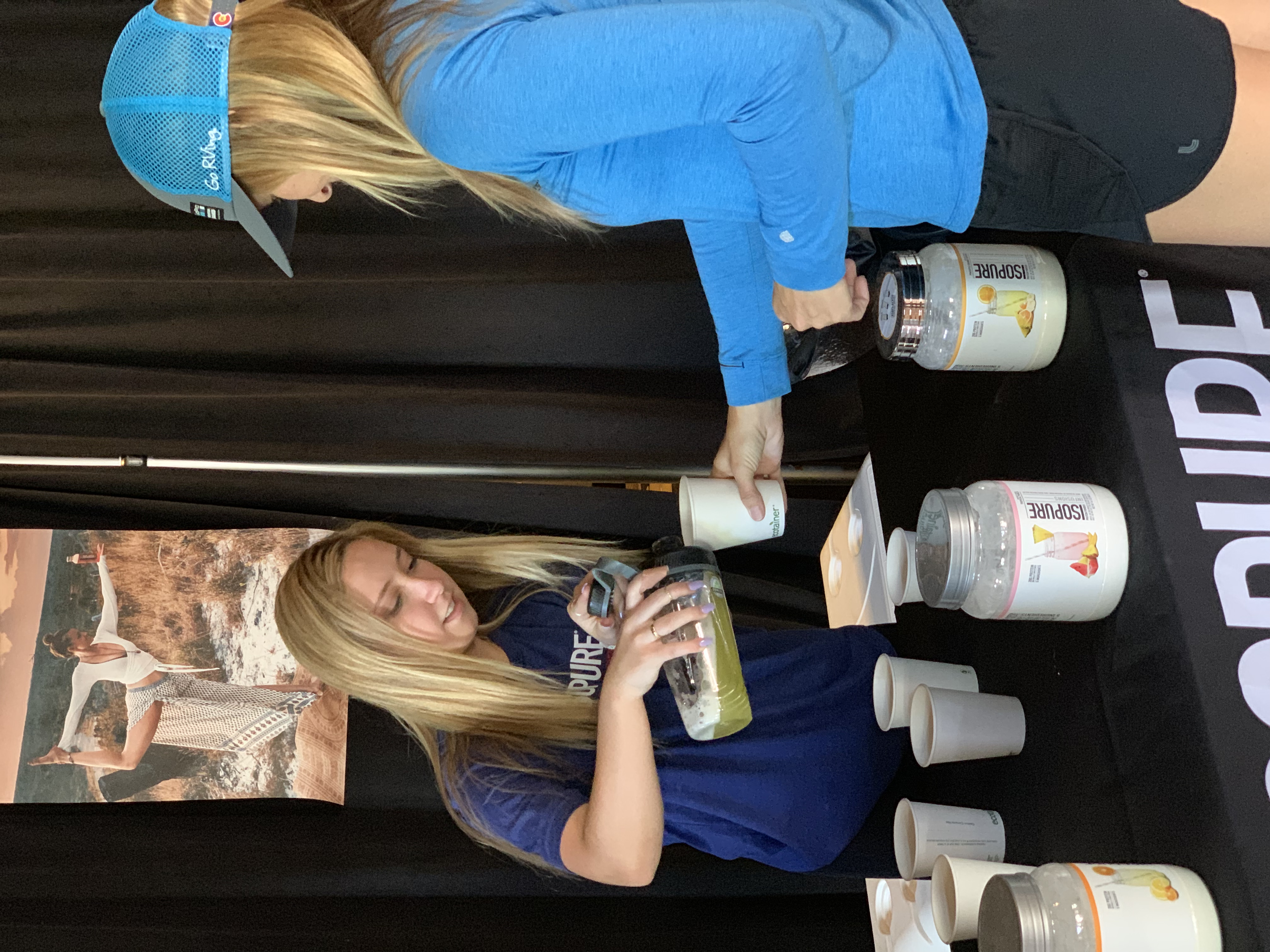
When ISOPURE ran Amazon Treasure Truck sampling, we put 24 trucks in 24 cities in one day. The Toyota Marine Corps boot camp challenge produced more than 2,500 brand touches in eight hours. Those are reach and contact numbers, and for a CPG brand they only become useful when you set them beside sell-through in the markets the tour touched.
The weak point is routing. Weather turns, a partner event gets cancelled, a venue falls through.
When does a pop-up make sense?
A pop-up makes sense when the product needs time and space to be understood, or when you want a place people can find on purpose. It costs more to stand up than a sampling table, so it has to earn the extra spend.
It fits a product with a real story, a launch that needs explaining, or a category where people want to touch and try before they believe. You'd count visits, trials, purchases at the pop-up if sales are allowed, and the content people create there. The same 2022 roundup claims "67% of consumers bought products straight from consumer experiences." If your pop-up can't sell or point to a sale, you're giving up the strongest proof you could collect.
The failure to watch for is a packed room with no product in anyone's hand. That's the exact problem we exist to fix.
What is VIP hospitality worth to a consumer brand?
Hospitality earns its money when the guests can move volume for you: key accounts, retail buyers, distributors, top customers. It's a high-touch experience built to strengthen relationships, so the useful question afterward is who ordered. Did the buyer you'd chased for a year finally take the meeting? Did a distributor add a SKU?
Answering that takes a guest list built with your sales team and a follow-up plan that exists before the doors open. For a brand that needs consumer trial, it's the wrong tool. For a brand whose growth depends on a short list of accounts, it can be the right one.
Do trade shows belong on the list?
They belong when the goal is leads, and the exhibit should be built to generate them. A booth with no activation plan is the oldest mistake in the business, since people walk past a logo and stop for something to do, taste or try.
You'd measure qualified conversations, meetings booked and follow-ups completed. If your provider can't tell you what happens to a lead after the show, you've paid for floor space and nothing else.
What about cause marketing, sponsorships, college programs and special events?
These round out the service list, and the same rule applies to each: name the job, then name the number. Cause marketing ties your brand to a purpose people already care about. Sports and music sponsorships put you where fans gather, and they only pay off when an on-site experience goes with the logo. College influencer marketing uses campus creators and peer ambassadors to reach students through people they know. Special events are custom builds around a brand story.
We'd ask the same question of every one of them. What should a shopper do after this, and how will we see it in sales? If the answer is vague, the service is decoration.
How do the services compare?
The table puts the five core jobs side by side, with the first number to ask for and what each service can't prove alone.
| Service | Its job | First number to ask for | What it can't prove alone |
|---|---|---|---|
| Product sampling | Trial | Samples delivered against goal, by market | Repeat purchase |
| Mobile tours | Reach in many places | Touches per stop, product in hand | Sales lift without retail data |
| Pop-ups | Understanding and buzz | Visits, trials, on-site purchases | Lasting loyalty |
| VIP hospitality | Relationships | Orders or meetings from guests | Consumer trial |
| Trade shows | Leads | Qualified conversations | Closed deals without follow-up |
The last column is where most proposals go quiet, and it's why no single row does everything. The strongest programs pick one primary job and let a second service support it. Our Super-Sampling approach concentrates sampling in an anchor city so you can see the effect before spreading out. Under our Local Impact Marketing method, that starts with a Spend Audit, moves to Targeted Reallocation, then Run and Prove. MOGXP puts marketing dollars where they move people, then proves it. We cover metrics in Experiential Marketing: Choosing Metrics, and how the return gets argued in How Experiential Marketing Drives Real ROI.
What does it cost?
It depends on the number of markets and events, staffing, production and program length. For emerging brands, our programs typically run $5K to $50K each. National brands usually run $100K to $3M per project, and national work is mostly project-based with repeat programs. Those are our own ranges and not an industry benchmark, and we'll give you a firm number once we know the scope.
The budget question we hear most is "we can't afford that." You don't have to spend heavily on a big event or sponsorship, and smaller targeted tactics sometimes return more than larger ones. A good provider will tell you so, even when it means a smaller invoice.
Planning time matters too, and we walk through it in How Long Does Experiential Marketing Take to Plan?.
What are the most common mistakes?
The costliest one is buying the activation before the plan. A booth or a sponsorship with nothing behind it gets you presence and little else, and the money is gone before anyone asks whether the place, time, audience and message line up.
The next is counting the crowd. Expo Centric cites a 2018 finding that "52% of consumers say they have more positive feelings about brands after attending experiential marketing events." Good feelings are worth having, yet your finance team will still ask where the sales are.
I'd also watch one thing that looks small. Product ordered without the logistics worked out to the minute leaves you short on day two or buried in boxes.
Pick a provider by the clarity of the plan, not the length of the service list. We also turn work away. If a brand wants a crowd instead of customers, or wants tools before strategy, we'll say so and pass.
FAQ
What is an experiential marketing agency?
It's a firm that plans and runs live brand experiences where consumers use, taste or try a product. The good ones handle permitting, staging, staffing, security and ambassador training, and they report results against sales. Our full explanation is in What an Experiential Marketing Agency Actually Does.
What does a full-service agency do?
It handles strategy, creative, production, staffing and measurement under one roof. For experiential work, that means one team owns the plan and the execution, so nobody can blame the handoff when something misses. Ask who is accountable for the result, by name.
How much do experiential marketing services cost?
Emerging brands typically spend $5K to $50K per program, and national brands $100K to $3M per project. The spread comes from markets, events, staffing, production and program length. Tell us your goal and we'll scope to it.
Which service should a CPG brand start with?
Usually sampling, because trial is the fastest route to a real read on the product. Start in one anchor city, measure against retail movement, then decide what to add.
What should you do today?
Before you send another brief, write down the one job you need from your next activation and the one number that would prove it. Then use the Ask an Expert button on mogxp.com and send us both, and we'll tell you honestly which service fits, even if the answer is the smaller one.