Experiential marketing is the broad approach, and brand activation is one campaign inside it, built to get a person to try, buy or sign up. As Evolve Experiences says, all brand activations are experiential, but not all experiential marketing is an activation. Judge both by whether product moved.
A brand activation can draw a big crowd and still move no product. I've watched it happen, and the recap deck never mentions it. What still surprises me is how many marketers sign a brief that uses both terms and defines neither. The two words overlap, but they answer different questions. The difference changes how you set the goal, how you pick a partner and how you read the results.
What is brand activation?
Brand activation is a campaign or event designed to get a specific action out of a specific person. That action is usually a product trial, a purchase or a sign-up. Epage Global puts the objective this way: "The objective is usually to create a specific action or response, such as product trial, lead generation, participation, purchase or increased awareness."
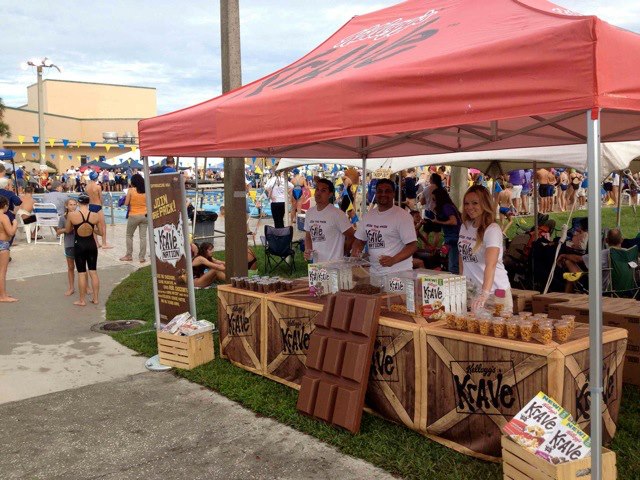
The format is concrete. Team Tecna describes a space "where people can try, touch and experience your product first-hand." Picture a sampling table, a branded truck parked where your buyer already walks, or a pop-up that hands someone the product and lets them decide.
Because an activation is built around one action, it's easy to measure. You know what you wanted a person to do, so you can count how many did it. Our page on brand activation and building connections with your audience covers the format in more detail.
What is experiential marketing?
Experiential marketing is the broader discipline. It covers any program that gets people to take part in a brand moment instead of just watching an ad. Evolve Experiences describes it as "a strategic approach that prioritises consumer participation over passive consumption."
The goal is usually familiarity and a lasting impression, and the program often runs for months or years. A sponsorship, a multi-city tour, a hospitality lounge and a run of pop-ups can all sit under it. Some of those pieces are activations. Others aren't, because nobody was asked to do anything with the product.
If you want the longer version, our page on experiential marketing and our explanation of what an experiential marketing agency actually does go further.
What is the difference between brand activation and experiential marketing?
The difference is scope and intent. Experiential marketing is the approach, and brand activation is one kind of campaign inside it, aimed at one action. Trevento draws the same line: "Brand activation pushes people to try products to register or buy. Experiential marketing creates moments that build strong relationships with a brand."
The table below puts the two side by side.
| Brand activation | Experiential marketing | |
|---|---|---|
| Scope | One campaign or event | The whole approach, often many programs |
| Main goal | A specific action: trial, purchase, sign-up | Familiarity and a lasting impression |
| Typical timeframe | A day, a weekend, a defined run | Often ongoing |
| Product in hand? | Almost always | Sometimes |
| Easiest metric | Samples given, trials, purchases | Participation, recall, brand feeling |
| Fits when | You have a launch or sampling goal | You're building a brand over time |
Look at the "Product in hand" row. An activation puts the product, or for a service a hands-on taste of it, in someone's hands. An experiential program can look great and never do that. Plenty of budgets go wrong in that gap.
What does a brand activation look like in practice?
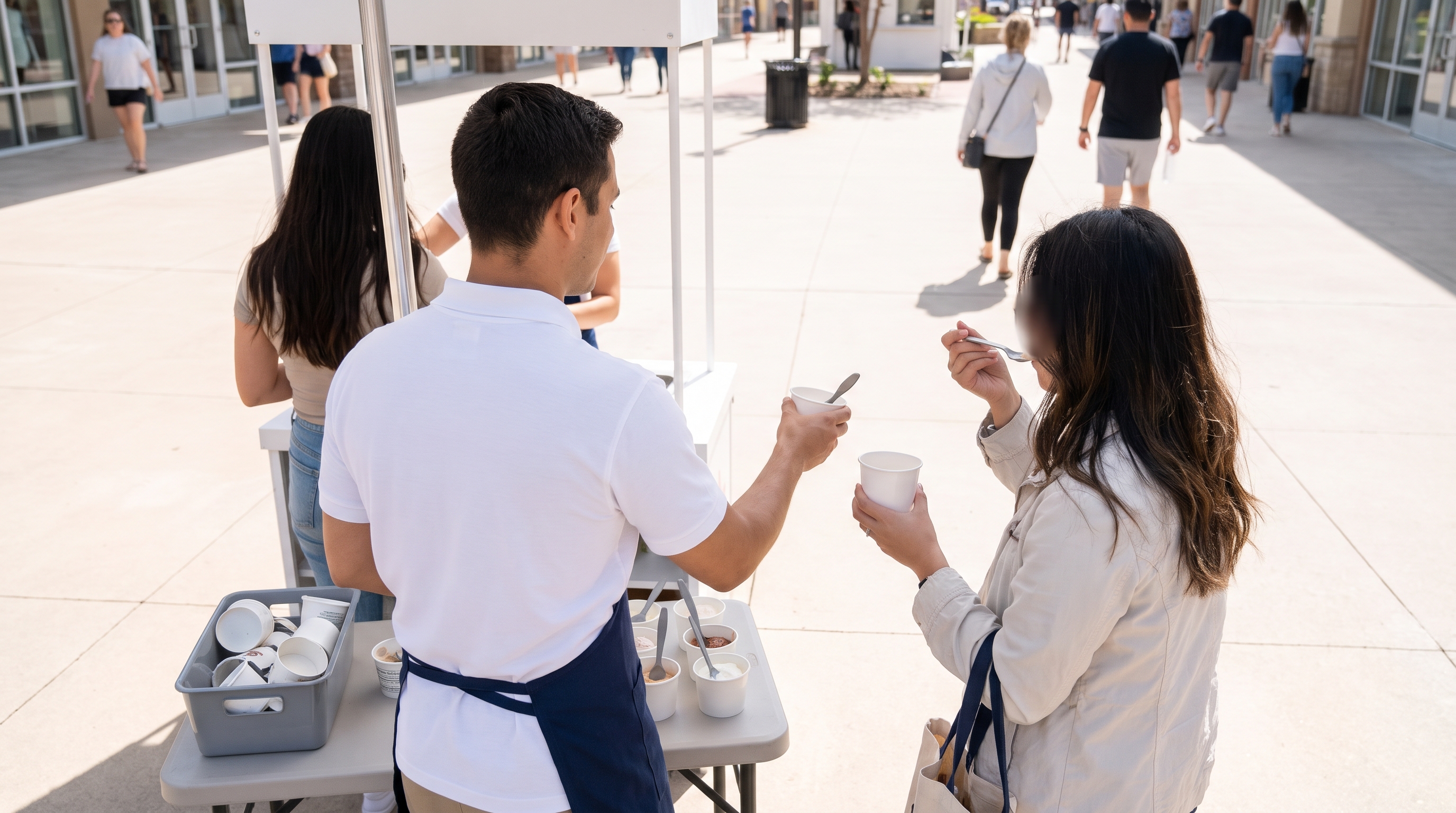
Think of a sampling table on a busy sidewalk. A person walks up, tastes the product, and decides on the spot whether they'd buy it, with the brand right there. Team Tecna gives a second shape: "a community event, like a fitness class brought to life by your brand."
Here's the caution. Samples handed out count how much product reached people. They don't count how many of those people bought it afterward. The number that comes after the sample is the harder one. It's also the one to ask any agency for.
When should you use each one?
Use a brand activation when you can finish this sentence: "After the event, I want people to ___ my product." A new launch fits. So does a sponsorship you need to turn into trial, or a sampling push in a few chosen cities. Our page on why experiential marketing works better for new product launches covers the launch case.
Use the wider experiential approach when the job is longer. If your brand is established and you want it to feel different to buyers over a year, you need several connected programs, and some of them will be activations.
Most real plans use both. The experiential strategy sets where and when you show up, and the activations are the moments inside it where product changes hands. Neither term is better than the other. They sit at different levels.
If your first thought is that you don't have the budget for this, you may be picturing the wrong size. You don't have to spend a lot on a big event or sponsorship. Smaller, targeted tactics can pay off better than large ones.
The case for doing this at all has some support. Live reports that "74% of consumers are more inclined to purchase a product after participating in a branded event." That's an agency's industry figure, not a promise about your results. Your outcome depends on your product, your audience and where you show up.
Does the label matter, or only the result?
The result matters more. Agencies use the two words loosely, and a vendor can call almost anything an activation. So we use one test, and we apply it to our own work first. Did it move product?
At MOGXP that test sits inside Local Impact Marketing, our method for putting marketing dollars where they move people. Before any money is committed, you can write three things on the brief. Name the one action you want a person to take with the product, whether that's trying it, buying it or signing up. Name the audience doing it, because a crowd isn't an audience, and a low cost per sample only helps if the right person took the sample. Then decide how you'll count what happened after the event, not only during it.
Most marketing money gets committed before anyone checks whether the place, the time, the audience and the message line up. If even one is off, the program fails, however good the setup looks. Our piece on how experiential marketing drives real ROI goes into the measuring side.
What are the common mistakes?
The most common one is buying a crowd. A program draws hundreds of people, the photos look great, and the recap deck is full of impressions. Then you look at sales and nothing moved. If your last activation looked like that, the problem was rarely the energy of the event. Nobody had defined the action up front.
Cost per sample misleads people too. A low number sounds efficient, but if nobody in the line would ever buy your product, you paid to give it away to the wrong people. Ask for cost per sample to the right person, even though it's harder to calculate and agencies tend to avoid it.
Watch for agencies that use the terms to dodge the goal. When one says "we do experiential" and can't tell you what a person will do with your product at the event, ask again. A vague answer usually means a vague plan.
A close launch date does its own damage. Skip the strategy conversation to save time and you get a truck on the street with no plan underneath it. A branded truck in the wrong neighborhood on the wrong afternoon is still a failed program, and it cost the same as a good one.
Some owners write all of this off because they sell a service. I hear "we sell services" a lot, and it's a fair worry. A small service can still be sampled through a short demonstration or a hands-on experience, so the activation idea holds. It just looks different at the table.
FAQ
What is an example of a brand activation?
A sampling table, a branded truck in a busy street, or a pop-up where people try the product first-hand. Each one asks a person to do something with the product, like taste it, hold it or buy it, while the brand is right there.
Is experiential marketing still a thing?
Yes. Evolve Experiences reports that "Globally, 77% of marketers report that live experiences are the most effective channel available to them." Sampling is one of its most measurable forms, because you can count what happened.
What is experiential marketing activation?
It's the part of an experiential program where people take a specific action with the product. The wider program builds familiarity. The activation is the moment someone tries, buys or signs up. People use the phrase loosely, so ask what action it was built to produce.
Which one do I need for a product launch?
Most launches need both, but start with the activation. Pick the cities, the audience and the one action you want, then decide what wider programming supports it. If you can't name the action, you're not ready to book anything.
What should you do next?
Before your next brief goes out, write one sentence that finishes "After this, I want _ people to _ our product." Then bring it to us at mogxp.com. We'll go through that sentence with you and tell you whether the plan lines up before you commit any budget.