According to Cvent, 77% of marketers use experiential marketing as part of their current mix. So your competitors are running activations too, and the format alone won't set you apart. What will is whether the person standing in front of your activation walks away with your product.
If you've run an activation that drew a crowd and left the sales line flat, you know the problem. The photos looked great and the recap deck was full of impressions, yet nobody could say how many people tried what you sell. What surprises me is how often the deck leads with crowd size anyway.
So the test for any idea is blunt. Does the consumer end up holding, tasting or trying what you sell? If not, you've bought a crowd. We get products in the hands of consumers, and that is the standard we hold every idea on this page to. For the wider view of how we work, start with our overview of experiential marketing.
What makes an experiential marketing idea worth funding?
An idea is worth funding when it puts the product in a consumer's hand during the experience, and when you can count how many hands. Everything else is decoration around that moment.
Cvent reports that 61% of attendees say they're more inclined to purchase after attending a brand event. Inclined is a long way from purchased. The gap between the two is the product, and whether the person tried it while you had their attention.
Before any idea gets budget, I'd ask three things. Will the consumer touch, taste or use the product at the activation? Can you count it, by sample, by sale or by sign-up? And is the activation somewhere this buyer is already open to it?
If the first answer is no for a product people can handle, rework the idea until it's yes. You can fix the second and third later, but the first decides everything.
Which experiential marketing ideas put product in a hand?
Six formats pass the test reliably.
| Idea | What the consumer holds | What to watch for |
|---|---|---|
| Sampling program in stores or on the street | The product itself, tasted or tried on the spot | Sampling the wrong people. Count trials against your target buyer |
| Mobile tour or branded truck | Product handed out at stops the truck was routed to | A route chosen for visibility instead of buyers |
| Campus or community brand ambassadors | Product plus a person who can explain it | Thin training. An untrained ambassador hands out samples and nothing else |
| Pop-up with a purchase point | The product, bought on the spot | Foot traffic with no reason to stop |
| Staffed retail table or in-store demo | A trial, a coupon and a next purchase | Staff who can't answer a shopper's question |
| Challenge or hospitality activation | Product woven into something people actually do | A game that has nothing to do with what you sell |
Most failures in the right column come down to who gets the product.
Sampling programs
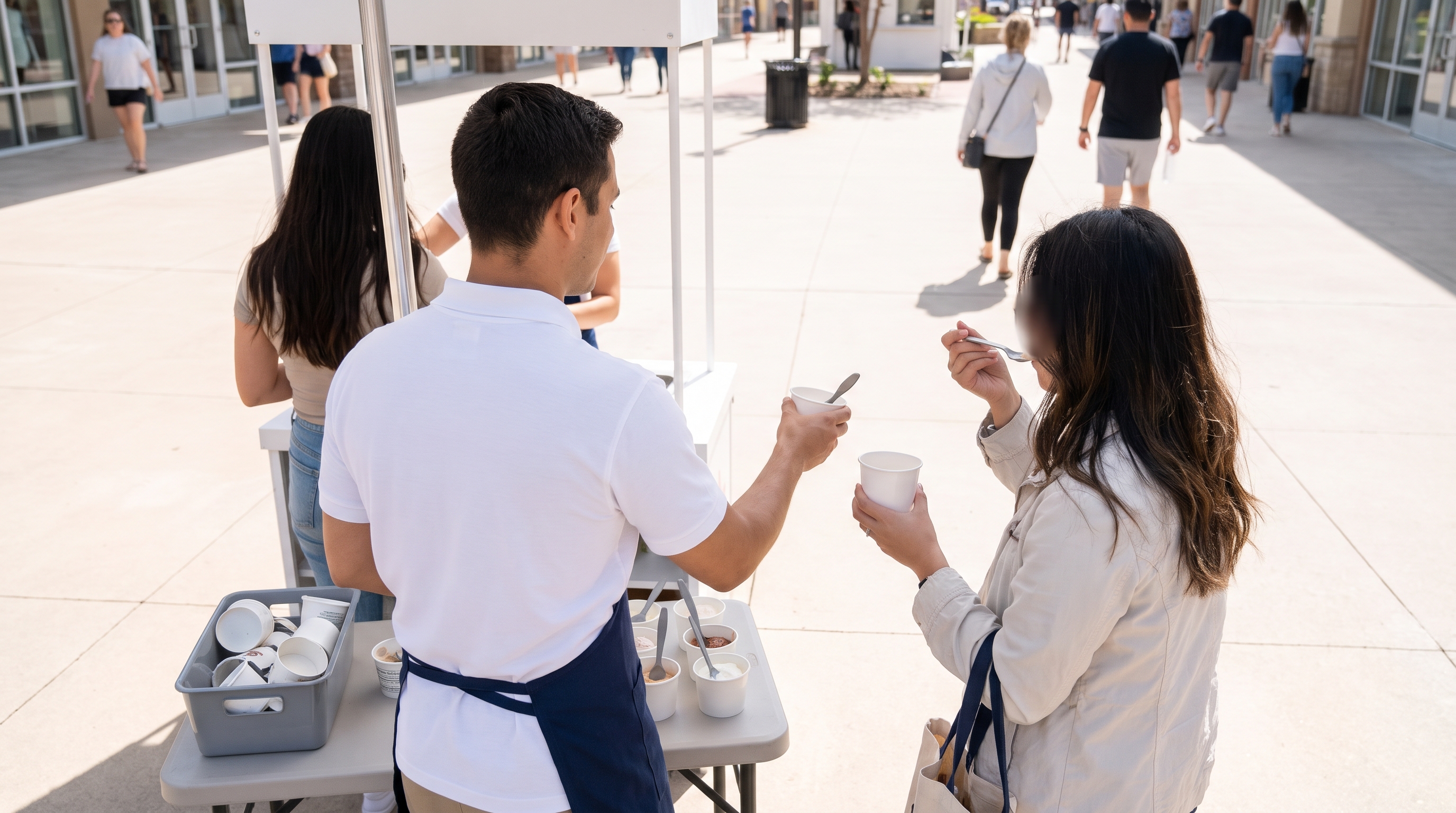
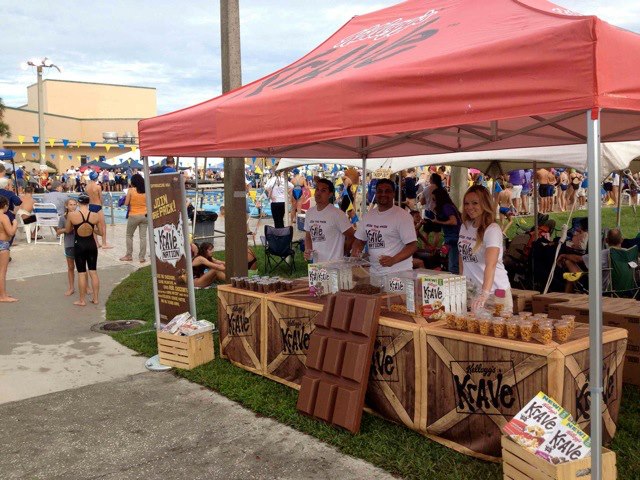
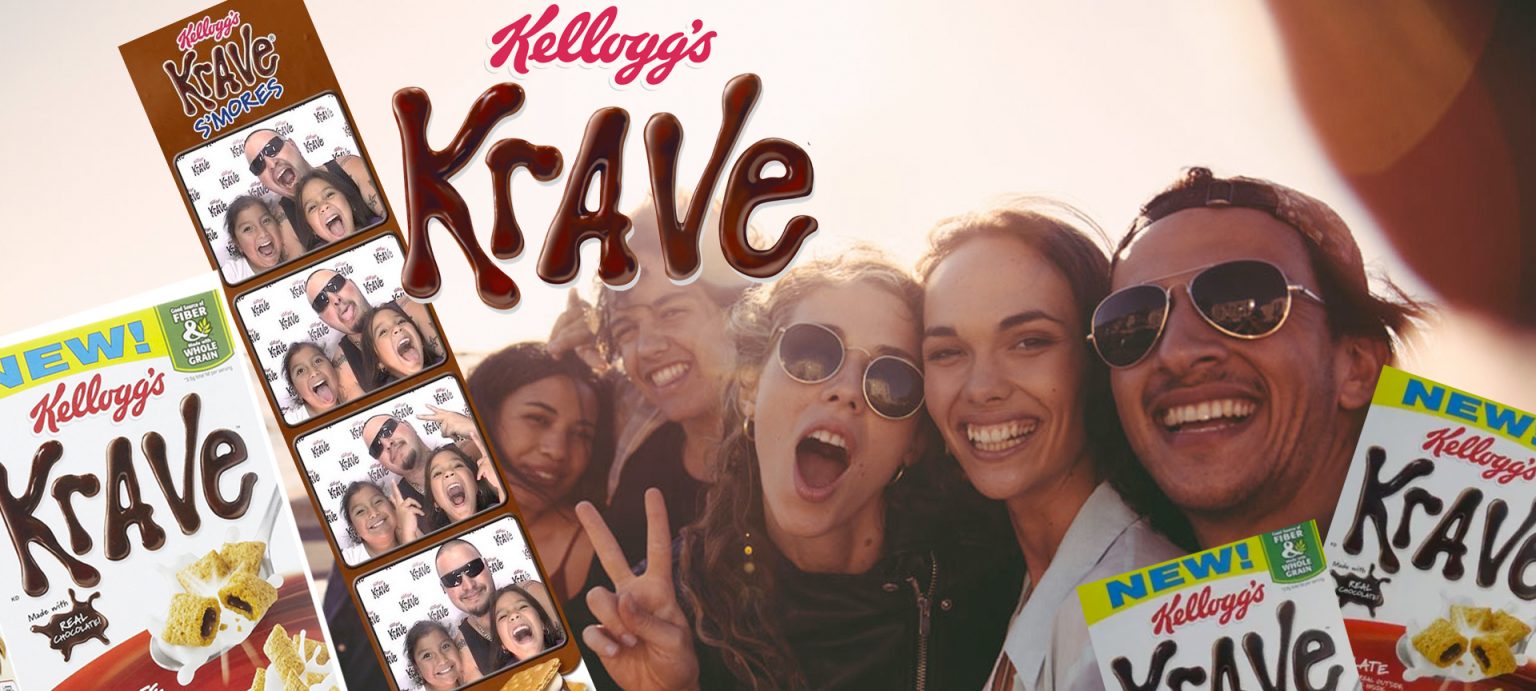
Sampling is the plainest idea on the list and still the strongest, because trial happens in the activation itself. Our Kellogg's Krave launch is the example we point to. The goal was 250,000 samples, and we delivered 300,000.
The smarter version of sampling picks where it goes.
Mobile tours and branded trucks
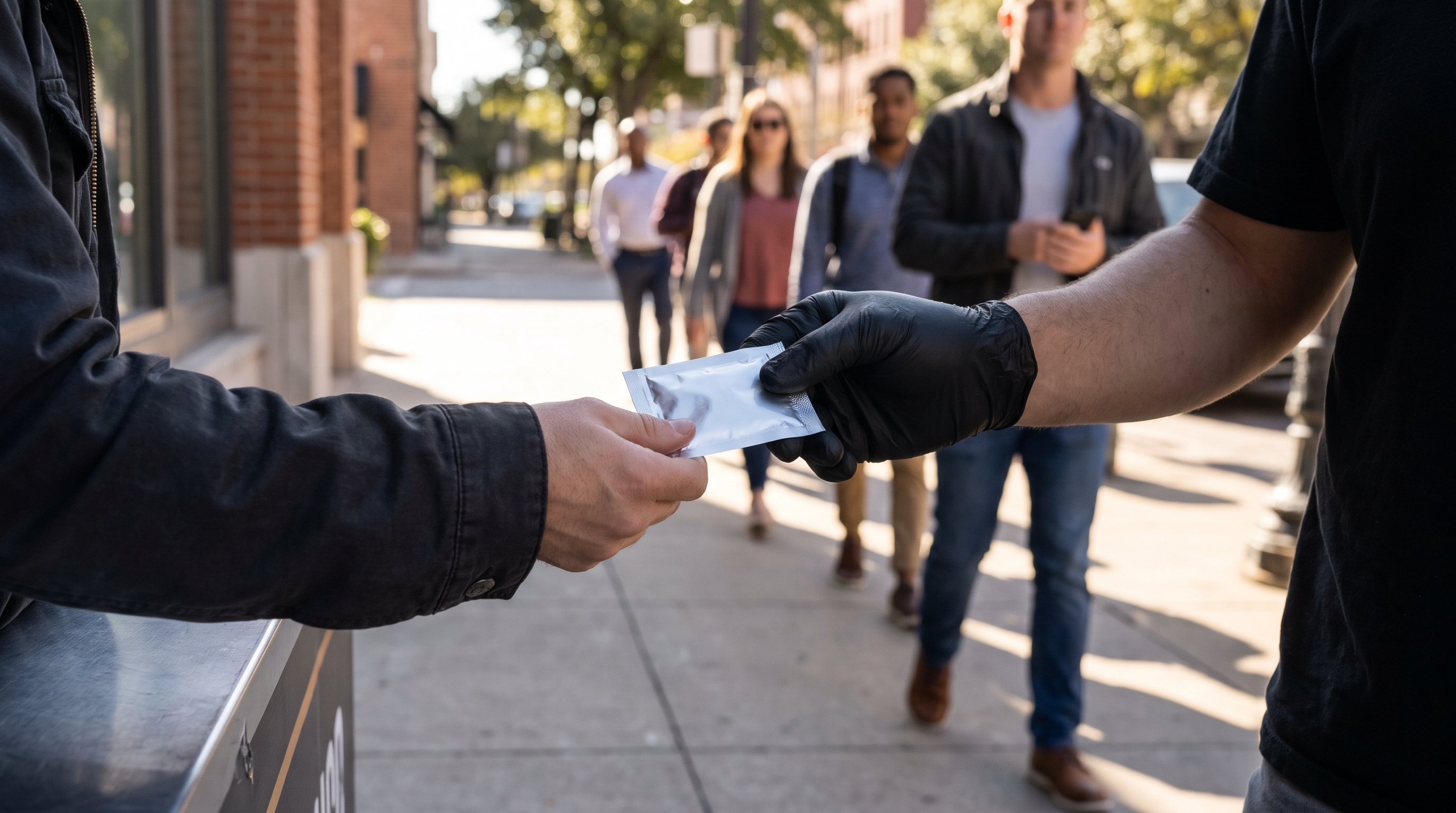
A truck goes to the consumer, so the consumer doesn't have to come to you. For ISOPURE, we ran Amazon Treasure Truck sampling across 24 trucks in 24 cities in a single day. The scale was the idea, since one coordinated day put the product in hands across the country at the same time.
If you're weighing a vehicle, route planning is the real work. Pick stops where your buyer already is, then staff the truck so every visitor leaves with something to taste or try. Our guide to how long experiential marketing takes to plan covers the lead times a multi-city day needs.
Campus and community ambassadors
An ambassador is a sample with a voice. They can hand over the product and answer the question that decides whether the person tries it. College campuses work well for this because students gather in predictable places and talk to each other.
The weak point is training. An ambassador who can only say "want a sample?" is a handout machine, so brief them on what the product is and who it's for.
Pop-ups, retail tables and demos
A pop-up works when it has a reason to stop someone and a way to buy. A staffed table in a retail aisle does the same job on a smaller budget. Start here if you're testing experiential for the first time, because you can run one table in one store before committing to a tour.
Challenge and hospitality activations
Sometimes the product can't be sampled easily, and the first question has to bend. Toyota's Marine Corps boot camp challenge is the case, and we counted more than 2,500 brand touches in eight hours. A touch is a weaker count than a sample, so use this format only when the product can't be handled. For anything you can put in a hand, sample instead.
For the broader picture of how an agency staffs and runs these, see what an experiential marketing agency actually does.
Which popular ideas draw a crowd and sell nothing?
Stunts, spectacle and photo walls draw the biggest crowds and tell you the least about sales. That doesn't make them worthless. They need a product moment attached, and if they don't have one, they belong in the failure column.
The measurement habits around them show the problem. Imagination describes how Visa's Masters of Movement experience at the FIFA World Cup "attracted 120,000 visitors, with each spending over 60 minutes in the activation." That measures attention and says nothing about anyone buying.
The most famous stunt on every list has the same shape. Another Way notes that Red Bull's Stratos jump "was streamed online on YouTube to over 8 million views" and reports a 33% increase in positive brand perception. Neither views nor perception is a sales figure, and few brands can fund a space jump anyway. Copying the format without the budget gets you the spectacle's weakness and none of its reach.
Three crowd-first ideas come up constantly. Photo spots and branded backdrops send people home with a picture, so put the product in the frame or hand it over at the exit. A giant installation stops traffic all by itself, which gives a staffed trial point right beside the installation a ready-made audience. When a celebrity or performer fills the space, the moment the crowd peaks is when a sample or a purchase offer should reach them.
Take the crowd you're going to get anyway and give it something to taste, hold or buy.
How do you match an idea to your goal?
Start with the single goal that matters most, then pick a format that serves it. Talk Experiential says it plainly: "The best experiential marketing ideas start from the goal, not the format."
They also lay out which format fits which job: "Pop-ups and street teams build awareness, moment-matched sampling drives product trial, interactive booths and workshops capture leads, micro-events build loyalty, storefront moments pull in foot traffic and designed photo spots create content."
For a CPG brand, we'd narrow that further. If people don't know your product, use street teams and pop-ups, then add a sample to each one. If they know it and haven't tried it, sampling is the answer. If you already have trial and need repeat purchase, a staffed retail table with a reason to buy again does more than any event.
Budget shouldn't rule ideas out. Smaller, targeted tactics sometimes return more than a large event or sponsorship, because they put the product in front of fewer, better-matched people. A single staffed table can beat a big stage when the table is in the right store.
Our approach to this is Local Impact Marketing, which runs in three stages. We start with a Spend Audit, then a Targeted Reallocation of that spend, then Run and Prove. The order matters. Most marketing money gets committed before anyone checks whether the place, the time, the audience and the message line up, and if one of those four is off, the campaign fails however good the idea is.
How do you know the idea worked?
You know it worked when you can count products in hands and tie them to sales. Count samples given, trials completed, purchases made at the activation and any redemptions afterward. Crowd size and social posts are fine as supporting numbers, but they shouldn't be the headline.
There is an industry benchmark for return, with a catch. Copy.ai cites that "EventTrack 2015 reported that 49% of brands realized an ROI between 3:1 and 5:1 from experiential marketing campaigns." That figure is more than a decade old, and it describes what brands reported about their own campaigns, which tells you little about what any one activation will do for you. Use it as a rough sense of what's possible, then set your own target from your own numbers.
We go deeper on this in how experiential marketing drives real ROI. If you're planning a launch, why experiential works better for new product launches is the next read.
Common mistakes
Teams choose the idea first and the goal second. They fall in love with a truck or a stunt, then hunt for a reason to run it, and by the time the goal shows up the budget is spent.
Crowd counts and impressions are easy to report, so they land in the deck while the sample count, the one number that matters, goes missing. If your report can't say how many people tried the product, you don't know yet whether it worked.
Ambassadors and table staff are the whole experience at the moment of contact. A rushed briefing shows up as a shrug at the table.
And a great activation in front of the wrong audience, or on the wrong weekend, fails the same way a bad one does. If even one of place, time, audience and message is off, the rest can't save it.
FAQ
What is experiential marketing?
Experiential marketing puts people inside a real, hands-on brand moment instead of asking them to look at another ad. They taste, try, hold or use the product while you're there. For a CPG brand, the strongest versions end with the product in the consumer's hand.
What are some examples of marketing activations?
Common activations include sampling programs, mobile tours, pop-ups, street teams, retail demos and challenge events. Ours include Kellogg's Krave sampling, ISOPURE Treasure Truck sampling across 24 cities, and Toyota's Marine Corps boot camp challenge. Each one put the brand directly in front of the buyer.
Do I need a big budget for experiential marketing?
No. Smaller targeted tactics, like a staffed retail table or one-city sampling, sometimes return more than a big event or sponsorship. Start with one tactic in one place, count the products in hands, and scale only what works.
Your next step
Pull up the last activation you ran and answer one question: how many people left holding your product?